The Complete Guide to Building a Brand for Your UK Business: 2026 Review

Building a brand for a small business in the UK is often approached in the wrong order. Most businesses start with what’s visible, a logo, a website, maybe some social content, and assume that’s what branding is. On the surface, everything looks “in place,” but underneath, something doesn’t quite connect. The message feels inconsistent, enquiries are unpredictable, and every new piece of marketing requires starting from scratch.
That disconnect usually comes from one place, the foundation was never properly defined.
In most cases, businesses invest in output before defining direction. The website goes live, the visuals look good, but the core message isn’t sharp enough to carry it. As a result, the brand ends up relying on design to do the work that strategy should have done upfront.
A strong brand works differently. It creates a system where everything, from your homepage to your marketing campaigns, points in the same direction. Customers don’t have to figure you out. They understand you quickly, and that clarity directly affects trust, conversion, and the quality of enquiries you receive.
Building a brand for a UK small business means creating a clear, consistent system across five areas:
defining who you serve, what you offer, and how you’re different
establishing a tone of voice that stays consistent across all communication
creating a visual identity that is recognisable and easy to apply
building a website that explains your offer clearly and converts visitors
developing a marketing approach that brings the right people to your business
When these elements are aligned, your brand becomes easier to understand, easier to trust, and easier to choose.
This guide breaks down how to build a brand properly, step by step, covering:
Brand foundations
Tone of voice
Visual identity
Website structure
Marketing strategy
Brand Foundations: Where Everything Starts
Most branding problems do not come from poor design or weak marketing. They come from unclear foundations.
A business launches, brand identity and a logo gets created, a website goes live, and marketing begins. On the surface, everything looks in place. But underneath, there is no clear definition of who the business is for, what it really offers, or why it is different. As a result, messaging drifts, visuals become inconsistent, and marketing feels scattered.
Strong brand foundations solve this early. They define what the business stands for before anything is designed or published.
At a practical level, this means answering a small number of core questions clearly. Who do you help, what problem do you solve, why should someone choose you, and what do you want to be known for. When these answers are specific, everything else becomes easier to build. When they are vague, every decision that follows becomes harder.
One of the most common mistakes is staying too broad. Businesses try to appeal to everyone, which results in messaging that feels generic. Narrowing focus usually feels uncomfortable at first, but it creates clarity. Clarity makes the brand easier to understand, and easier brands tend to perform better.
This is also where positioning begins. Without a clear position, the business competes on price or convenience by default. With it, the business can compete on relevance and perceived value instead.
If you’re unsure how to structure that decision, understanding the difference between working with a brand agency and a freelancer becomes important at this stage.
Foundations are not something customers always see directly, but they influence everything they experience. When they are strong, the brand feels coherent and intentional. When they are weak, even well-designed assets struggle to perform. At this stage, some businesses also consider protecting their name and identity legally, particularly if they plan to scale or operate nationally.
Why clarity is more important than creativity
There’s a natural tendency to prioritise how a brand looks before defining what it actually says. It feels more tangible. You can see a logo, react to colours, and judge a website visually. But clarity is what makes those elements work.
When the foundation isn’t defined, the same issues tend to surface repeatedly. Messaging shifts subtly from page to page, services are described in slightly different ways depending on where they appear, and marketing begins to drift away from what the website is trying to communicate. Over time, the brand loses cohesion, not because any single part is wrong, but because they are not aligned.
Once clarity is introduced, those inconsistencies begin to disappear. The brand starts to feel stable and coherent, not because consistency is being forced, but because everything is built from the same definition.
Why most small businesses struggle with this
The difficulty is rarely a lack of understanding. Most business owners know what they do and how they deliver value. The challenge is translating that into something structured and repeatable.
A common pattern is that the message changes depending on the situation. In conversation, the business can be explained clearly and confidently. On a website, that same message becomes broader and less precise. In marketing, it shifts again, often trying to appeal to a wider audience. Over time, this creates a fragmented impression, even if the service itself is consistent.
The pattern is consistent, the brands that perform strongest tend to be the clearest, not the broadest.
What your brand foundation actually needs to define
At a practical level, your brand foundation should answer four core questions:
Who you help
What problem you solve
Why someone should choose you
What you want to be known for
Each of these needs to be answered in a way that removes ambiguity rather than adds to it.
“Who you help” should go beyond general terms like “businesses” or “clients” and point to a recognisable group. The clearer this becomes, the easier it is for the right audience to identify with your brand.
“What problem you solve” should focus on the outcome, not just the service itself. There is a clear difference between describing what you do and describing the result it creates. One explains the work, the other explains the value.
“Why someone should choose you” is where many businesses fall back on generic language. Words like “quality,” “tailored,” or “professional” appear frequently, but they rarely create distinction. Strong positioning comes from identifying what is genuinely different in practice, not just in intention.
“What you want to be known for” sets the direction for how your brand is perceived over time. Without this, perception becomes inconsistent and dependent on individual touchpoints rather than a clear, repeated message.
Turning this into something usable
A strong foundation is not meant to sit in isolation. It should act as a working reference point.
When defined properly, it begins to influence everyday decisions. Website copy becomes easier to write because the message is already clear. Service pages become more focused because they are built around a defined audience and problem. Marketing becomes more consistent because it is aligned with a single direction rather than multiple interpretations.
This does not require a long or complex document. In most cases, a clear and focused one- or two-page foundation is enough. What matters is not the volume of information, but the precision of it.
The real impact of getting this right
When brand foundations are clear, the business starts to feel more coherent from the outside.
Instead of needing to interpret what a company does, potential customers understand it quickly. Instead of encountering slightly different messages across platforms, they see a consistent direction. Instead of hesitating, they move forward with more confidence.
The result is not just better presentation, but better alignment between the business and the people it attracts. Enquiries tend to become more relevant, conversations more focused, and decisions faster.
Without this layer, even well-executed design and marketing struggle to perform consistently. With it, everything else has a clear direction to follow.
Everything that comes next, tone of voice, visual identity, website, and marketing strategy, depends on this foundation being solid.
Tone of Voice: How Your Brand Sounds in Practice
Your tone of voice is the verbal version of your brand. It shapes how you sound on your website, in emails, on social media, and in conversations with customers. It is not about sounding “creative” for the sake of it. It is about removing confusion and making your business easier to understand and trust.
Most small businesses underestimate how much tone influences perception. Two businesses offering the same service can be received completely differently depending on how they communicate. One may feel clear, confident, and easy to deal with. The other may feel vague or overly complicated, even if the actual service is identical.
Tone works best when it is consistent but flexible. A homepage might sound more confident and direct, while a support message might feel more conversational and reassuring. The underlying personality stays the same, but the delivery adjusts to the situation.
To define tone, it helps to anchor it in a small number of clear characteristics. Words like friendly, clear, expert, direct, or premium give direction without overcomplicating things. The important part is not the words themselves, but how consistently they are applied.
Where most businesses struggle is turning those words into something usable. Tone only becomes effective when it is translated into how the business actually communicates day to day. That includes how services are introduced, how benefits are explained, how calls to action are written, and even how emails are phrased. Without this layer, tone remains an idea rather than something that shapes real communication.
When tone is applied consistently, everything starts to feel more aligned. The website reads clearly, marketing messages feel intentional, and customer interactions reinforce the same impression. When it is inconsistent, the brand feels fragmented, even if the visuals are strong.
Why consistency matters more than personality
There’s a common assumption that tone of voice is about sounding “creative” or “on-brand.” In reality, it’s about reducing confusion.
When someone lands on your website or reads your content, they’re not analysing your tone in detail. They’re forming a quick impression. If that impression feels consistent across every interaction, trust builds naturally. If it shifts, even slightly, it creates hesitation.
This is especially important for service-based businesses. Unlike product-based brands, where the product itself carries part of the decision, services rely heavily on perception. The way you communicate becomes part of the service experience.
A consistent tone signals reliability. An inconsistent one suggests uncertainty, even if the underlying business is strong.
Defining your tone of voice properly
A practical way to define tone is to anchor it in a small number of characteristics. Not vague descriptors, but words that can actually guide how something is written.
A typical starting point might include:
Friendly
Clear
Expert
Direct
Premium
The key is not just choosing these words, but understanding what they mean in practice.
“Clear” means avoiding unnecessary complexity. “Direct” means removing filler language and getting to the point. “Expert” means sounding confident without becoming overly technical or difficult to understand.
In most cases, businesses stop at the word level. They define the tone, but don’t translate it into examples. That’s where inconsistency begins.
Turning tone into something usable
For tone of voice to work properly, it needs to move beyond description and into application.
That means defining:
how you introduce your services
how you explain benefits
how you handle objections
how you write calls to action
Without this, each piece of content becomes a fresh interpretation of the same idea.
A simple way to strengthen this is to define both what the brand should sound like and what it should avoid. For example, if the tone of voice and messaging strategy are meant to be clear and direct, overly complex sentences and jargon-heavy explanations should be excluded. If it’s meant to feel premium, overly casual or inconsistent phrasing can weaken that perception.
In most cases, once these boundaries are set, writing becomes easier. Instead of guessing how something should sound, there’s a reference point to work from.
Allowing flexibility without losing consistency
A common concern is that defining tone too strictly makes communication feel rigid. In practice, the opposite is true.
A good tone of voice doesn’t force everything into the same style. It allows for variation depending on context, while maintaining a consistent underlying feel.
A homepage, for example, might need to sound more confident and structured, because it’s introducing the business and setting expectations. A support email, on the other hand, should feel more conversational and human, because it’s responding to a specific person.
The tone shifts slightly, but the core characteristics remain the same.
The pattern is consistent, strong brands don’t sound identical everywhere, but they always feel like the same business.
The impact of getting this right
When tone of voice is defined properly, communication becomes more efficient.
Instead of rewriting content multiple times to “get it right,” there’s a clear direction from the start. Instead of different contributors producing slightly different versions of the same message, everything aligns more naturally.
More importantly, the brand becomes easier to recognise. Not just visually, but verbally. Over time, that builds familiarity, and familiarity builds trust.
Without this layer, even strong messaging can feel inconsistent. With it, the brand starts to feel stable, clear, and intentional across every interaction.
Tone of voice sits directly on top of your brand foundations. Once both are aligned, the visual identity becomes much easier to apply consistently, because the brand already knows how it thinks and how it speaks.
Visual Identity: Making Your Brand Instantly Recognisable

Once your brand knows what it stands for and how it sounds, the next layer is how it looks.
Visual identity is often the part most businesses jump to first, but it only works properly when it’s built on top of clear foundations and a defined tone of voice. Without that, even a well-designed identity becomes surface-level, something that looks good in isolation but doesn’t carry meaning across the business.
A strong visual identity does more than make a brand look professional. It makes it recognisable, consistent, and easy to process at a glance. It removes the need for people to think too hard about what they’re looking at, which is exactly what good branding should do.
This is also where expectations need to be realistic. Building a brand and seeing consistent results takes time, and understanding how long brand identity development typically takes helps set that direction properly.
Why visual consistency builds trust faster than design alone
There’s a difference between something looking “nice” and something feeling credible.
Many small businesses invest in design that looks modern or polished, but apply it inconsistently. Colours shift slightly between platforms, fonts are swapped depending on what’s available, layouts change depending on who’s creating the content. None of these are major issues individually, but together they create a subtle sense of instability.
That instability affects perception.
When a brand feels visually stable, meaning the same colours, typography, and structure appear repeatedly, it builds familiarity. Familiarity reduces friction, and reduced friction increases trust. People don’t need to re-evaluate what they’re looking at each time they encounter the brand.
This is why strong brands are recognisable even without a logo present. The visual language itself becomes the identifier.
What actually makes up a visual identity
At a practical level, your visual identity is not just a logo. It’s a coordinated set of elements that work together across every touchpoint.
A basic identity should include:
Logo variations and usage rules
A defined colour palette with exact values
Typography choices with clear hierarchy
Image and graphic style guidelines
Layout principles for consistency across platforms
The important part is not the individual elements, but how they are applied together. A logo on its own does very little. It only becomes valuable when it sits within a consistent visual framework that reinforces the same look and feel every time.
Where most small businesses go wrong
The most common mistake is treating visual identity as a one-time design task rather than an ongoing structure.
A logo gets created, colours are chosen, and then application is left to interpretation. Over time, that leads to drift. Social posts begin to look different from the website. Marketing materials move away from the original design. New elements are added without reference to what already exists.
Another issue is overcomplication. Some businesses introduce too many colours, fonts, or styles in an attempt to appear more dynamic. In practice, this weakens the identity. Simpler visual frameworks are easier to apply consistently, and consistency is what creates recognition.
There is also a tendency to follow trends too closely. What looks current at the time of design may age quickly or fail to reflect the actual positioning of the business. Visual identity should support how the brand wants to be perceived, not just reflect what is popular at the time.
Designing for application, not just presentation
A strong visual identity is not judged by how it looks in a single mockup. It’s judged by how easily it can be applied across different contexts.
In practical terms, the identity needs to work just as well on a website as it does on social content, documents, presentations, or print. It should hold up across different screen sizes and formats without needing constant adjustments. If each new piece of content requires rethinking colours, spacing, or typography, the identity hasn’t been built for real-world use.
This is where many small business brands struggle. The design itself may be strong, but it hasn’t been structured for everyday application. As a result, each new asset introduces small variations, and over time, those variations build into inconsistency.
A well-built visual framework removes that problem. It gives clear direction, so whether something is created internally or externally, it still feels like part of the same brand.
The relationship between visual identity and perception
Visual identity plays a direct role in how a business is positioned.
Colour choices, typography, spacing, and layout all signal something, whether intentionally or not. A clean, minimal approach might suggest precision and control. A more expressive style might suggest creativity and energy. Neither is inherently better, but they need to align with the brand’s foundations and tone of voice.
When there’s a mismatch, the brand feels off. A business positioned as premium but using inconsistent or overly casual visuals creates doubt. The message says one thing, the visuals suggest another. This is where brand guidelines play a crucial role to keep the entire brand and visual identity together across all channels.
When everything aligns, the perception becomes stronger. The brand doesn’t need to explain itself as much, because the visual cues support the message automatically.
The impact of getting this right
When visual identity is applied consistently, the brand becomes easier to recognise and easier to trust.
Customers begin to associate a specific look and feel with your business, even before they read the content. Over time, that recognition builds familiarity, and familiarity reduces hesitation.
Internally, it also simplifies execution. Instead of making design decisions repeatedly, there’s a defined approach to follow. That speeds up content creation and reduces inconsistencies across platforms.
Without this layer, brands tend to feel fragmented visually, even if the underlying business is strong. With it, everything starts to feel connected, reinforcing the same message through both words and visuals.
Visual identity sits directly on top of tone of voice. Once both are aligned, your website becomes the place where everything comes together into a single, structured experience.
Website: Where Your Brand Either Converts or Gets Ignored
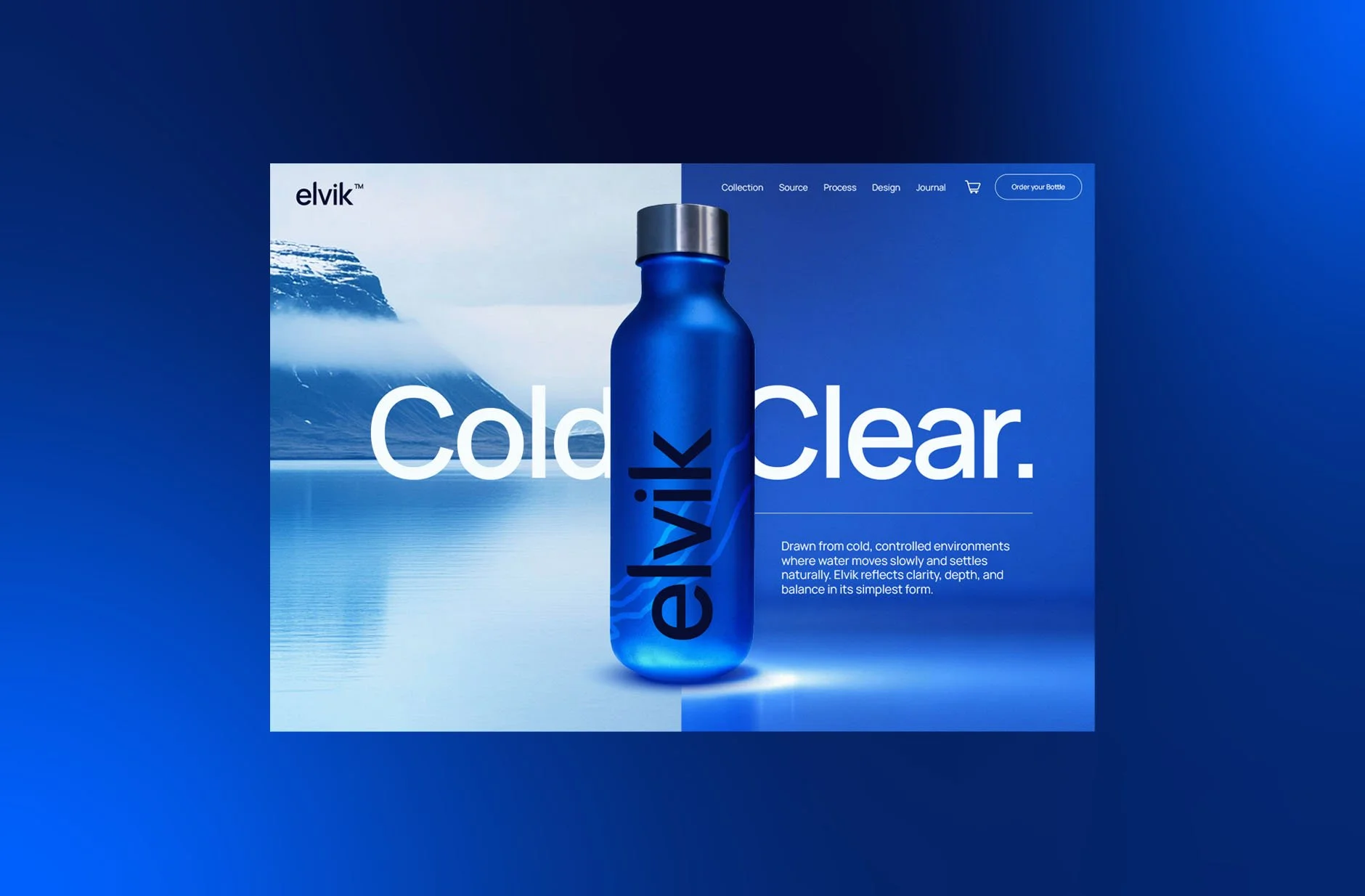
Once your brand foundations, tone of voice, and visual identity are aligned, your website becomes the place where everything comes together.
This is where most small businesses expect results, enquiries, calls, or bookings, but it’s also where many brands underperform. Not because the website looks bad, but because it doesn’t guide the visitor clearly enough.
A website is not just a digital brochure. It’s a structured experience designed to move someone from curiosity to action. If it doesn’t do that within the first few seconds, it loses momentum.
Why good-looking websites still fail
There’s a common assumption that design quality equals performance. In reality, clarity and structure matter far more.
Many websites look polished but leave visitors asking the same questions. What does this business actually do, is it relevant to me, and what should I do next. If those answers aren’t immediate, people don’t stay long enough to find them.
This usually happens when websites are built around aesthetics rather than communication. The layout might be modern and visually strong, but the message is buried or unclear. As a result, visitors leave without taking action.
A high-performing website removes that uncertainty. It makes the offer obvious, the value clear, and the next step easy.
What your website actually needs to do
At a practical level, your website has one job, to explain your business clearly and move the right people towards contacting you.
That means showing who you help and what you do within seconds, reinforcing trust early in the journey, guiding visitors through a logical flow of information, and making the next step feel simple and low-friction. When these elements are in place, conversion becomes a natural outcome rather than something forced.
The structure most small businesses should follow
A simple, well-structured website will outperform a complex one almost every time. The goal is not to impress with volume, but to guide with clarity.
Most small business websites work best when built around a core set of pages that each serve a clear purpose. The homepage introduces the business and sets expectations, making it immediately obvious who the service is for, what it does, and why it matters. If this page is vague, everything else becomes harder to navigate.
The About page builds credibility by adding context to the business and reinforcing trust. Service pages are where decisions happen, and they need to be specific, clear, and built around real problems and outcomes. Case studies or portfolio content provide proof, showing that the business can deliver what it claims. The contact page then becomes the final step, and it should feel obvious and effortless.
How structure affects conversion
A well-structured website reduces the amount of thinking a visitor has to do, improving the overall user experience.
Instead of searching for information, they are guided through it. Instead of questioning relevance, they see clear signals that they’re in the right place. Instead of hesitating at the end, they are given a simple next step.
This is where many websites fall short. They present information, but they don’t guide behaviour.
The role of trust in website performance
Trust is one of the biggest conversion factors, especially for service-based businesses.
Visitors are not just evaluating what you do. They are deciding whether they feel confident enough to reach out.
This is influenced by:
clarity of messaging across key pages
consistency of visual identity and layout
visible proof such as testimonials and case studies
overall sense of professionalism
If any of these feel weak or missing, hesitation increases.
A strong website addresses this early. It integrates trust signals throughout the experience so that by the time a visitor reaches the contact stage, the decision already feels justified.
Why simplicity outperforms complexity
There’s often a temptation to add more, more pages, more features, more design elements, in an attempt to make the website feel more complete.
In practice, this creates friction.
More options create more decisions, and more decisions create hesitation. When visitors hesitate, they are more likely to leave.
Clear, focused websites perform better because they guide attention instead of scattering it. Every section, page, and element should exist for a reason, and that reason should support the overall goal of moving the visitor forward.
The impact of getting this right
When a website is structured properly, everything starts to feel easier.
Visitors understand the business quickly. They move through the pages naturally. They reach the point of contact without confusion or hesitation.
From a business perspective, this leads to more consistent enquiries, better quality leads, and shorter decision cycles.
Without this layer, even strong branding and marketing struggle to convert. With it, your website becomes the central point where everything works together to generate results.
Your website is where your brand becomes real. Once it’s structured correctly, the final layer, your marketing strategy, becomes far more effective because it has a clear destination to point towards.
Marketing Strategy: Turning Your Brand Into Visibility and Enquiries

Once your brand is defined, expressed, and structured through your website, marketing becomes the layer that brings it into the real world.
This is where many small businesses lose direction. Not because they lack effort, but because activity replaces strategy. Posting regularly, running ads occasionally, updating the website, all of it feels productive, but without a clear structure behind it, results remain inconsistent.
A marketing strategy is what removes that randomness. It defines where your brand shows up, what it says there, and what success actually looks like.
For most UK small businesses, the most effective approach is not complex. It usually sits around a combination of search-friendly content, consistent social presence, and local visibility where relevant. The difference is not in the channels themselves, but in how clearly they are aligned.
When your website, ads, email, and social all communicate the same message, the brand becomes easier to understand and easier to trust. When each channel says something slightly different, that clarity disappears.
Why most marketing efforts stall
The issue is rarely a lack of tools or platforms. It’s a lack of focus.
Many businesses try to be present everywhere at once, across multiple social platforms, paid ads, email campaigns, and content creation, without the capacity to maintain consistency across all of them. As a result, each channel becomes diluted, and none of them perform particularly well.
There is also a tendency to prioritise output over direction. Content is created regularly, but without a clear link to what customers are actually searching for or thinking about. This leads to activity that looks consistent but doesn’t translate into enquiries.
Another common problem is misalignment between marketing and the website. Traffic is generated, but when visitors arrive, the message doesn’t match what attracted them in the first place. That disconnect reduces conversion, even if visibility is strong.
A simple structure that actually works
A focused marketing strategy is built around clarity, not volume. It defines who you are trying to reach, where you can realistically reach them, and what you want them to do.
In practice, this means narrowing your attention to one to three core audiences that your business is best suited to serve, choosing two or three channels that you can realistically maintain over time, and setting a small number of measurable goals such as enquiries, calls, or conversions. From there, content should be built around real customer questions and search behaviour, so that every piece of activity connects back to something people are already looking for.
This approach keeps marketing grounded. Instead of chasing visibility everywhere, effort is concentrated where it has the highest chance of producing results.
The role of consistency in growth
Consistency is what turns marketing from short-term activity into long-term growth.
When the same message appears across different channels over time, it reinforces recognition. People begin to associate your brand with a specific service, style, or outcome. That recognition reduces the effort needed to convert future visitors into enquiries.
Without consistency, every interaction feels like a first impression. The brand never compounds its visibility, it simply resets it each time.
This is why alignment across your website, content, and communication matters so much. Each piece supports the others, rather than working in isolation.
How marketing connects back to everything else
Marketing does not sit separately from branding, it depends on it.
If your foundations are unclear, your marketing will be inconsistent. If your tone of voice is undefined, your content will vary depending on who creates it. If your visual identity is weak, your brand will be harder to recognise across platforms. If your website is unclear, your marketing traffic will not convert.
When each of those layers is in place, marketing becomes far more effective. Instead of trying to compensate for gaps, it amplifies what is already working.
We have prepared a complete guide that will help you through the next steps of getting your business off the ground online: The Complete Guide to Getting Your Small Business Found Online
Clarity Wins Over Complexity
The strongest small-business brands are not the most complex or the most expensive. They are the ones that are easiest to understand and most consistent over time.
When your brand foundations, tone of voice, visual identity, website, and marketing strategy all point in the same direction, everything becomes more efficient. Customers understand you faster. Decisions become easier. Trust builds more naturally.
This is where most businesses start to see real momentum, not from doing more, but from doing the right things in a coordinated way.
For businesses building in the UK, especially across competitive areas like London, Essex, and the wider South East, that clarity becomes a real advantage. It allows smaller brands to compete effectively without needing the same scale or spend.
At that point, branding stops being a one-off project and becomes a working system. One that supports every part of the business, from visibility to conversion.
And once that system is in place, growth becomes far more predictable.
Frequently Asked Questions
-
Start with clarity, not design. Define who you help, what problem you solve, and why someone should choose you. Once that foundation is clear, everything else, tone, visuals, and website, becomes easier to build correctly.
-
A logo is a visual identifier. A brand is the full system behind it, including positioning, messaging, tone of voice, experience, and perception. The logo represents the brand, but it is only one part of it.
-
A basic but well-structured brand can be developed in a few weeks. More strategic projects involving research, messaging, and full rollout can take several months. The timeline depends on how deep the process goes and how many elements are included.
-
Costs vary widely depending on scope. A basic identity may start from a few thousand pounds, while a full strategic brand with website and rollout can reach £10,000 to £30,000+. If you want a more detailed breakdown of what affects cost and what you actually get at each level, see our guide on how much a rebrand costs in the UK.
-
Yes. Without a clear strategy, a logo becomes guesswork. Defining positioning, audience, and messaging first ensures the visual identity reflects something meaningful rather than just looking good.
-
You can build a basic brand yourself, especially in early stages. However, as the business grows, external input often helps create clearer positioning, stronger consistency, and a more scalable system that supports long-term growth.
This is exactly how projects are approached at Horizium, building brands as connected systems rather than isolated deliverables. For small businesses, this typically means combining strategy, identity, website, and ongoing visibility into one aligned structure, rather than trying to piece them together separately over time.