What Is a Phygital Agency, and Why Are More Brands Thinking Beyond Digital?
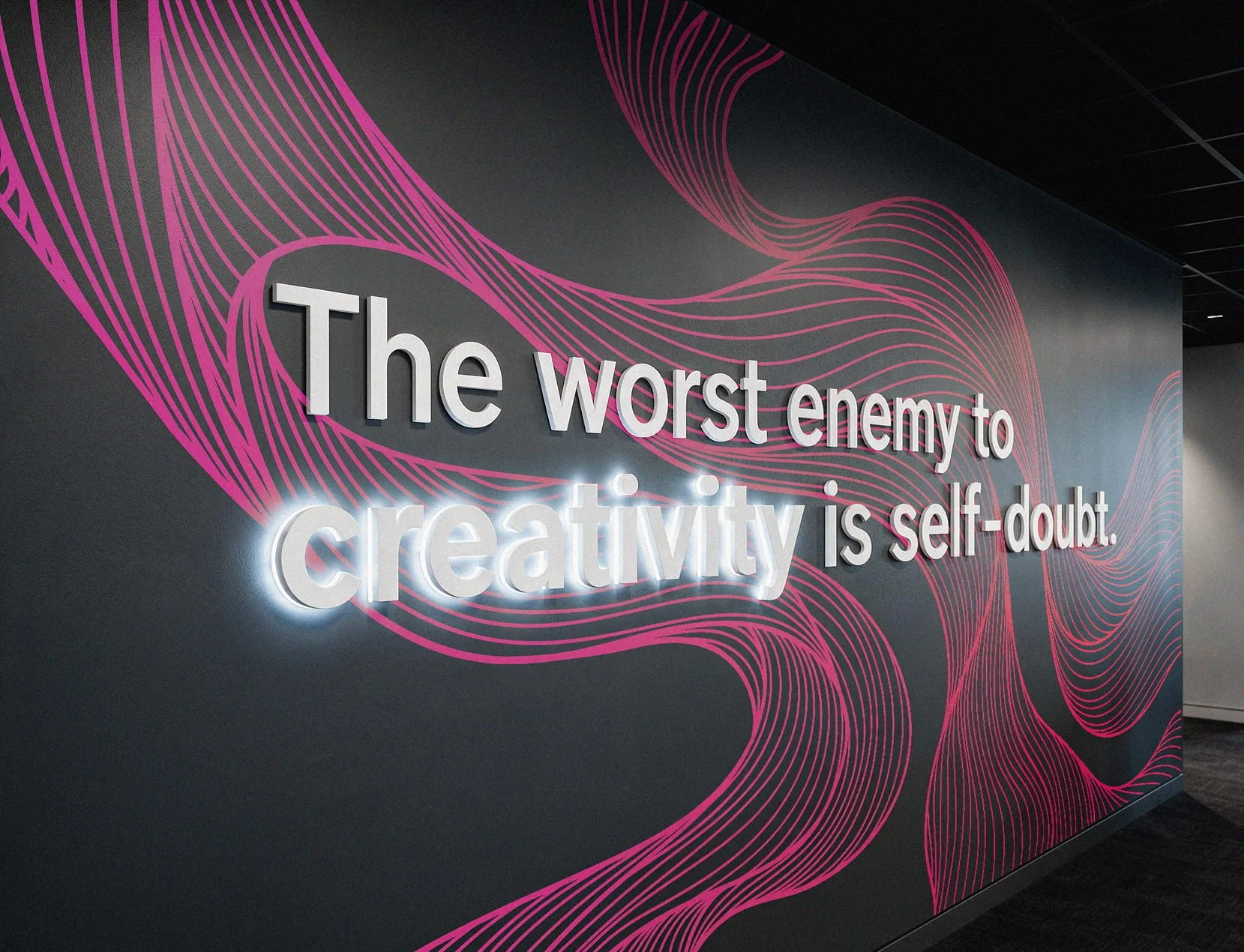
The word phygital has become increasingly common in discussions around branding, retail, workplace design and customer experience, yet there is still little agreement about what it actually means. It is often associated with technologies such as augmented reality, QR codes, digital screens or interactive displays, while others use it interchangeably with omnichannel marketing. Although these technologies may contribute to a phygital experience, they do not define it. At its core, phygital describes the deliberate integration of physical and digital experiences so that customers perceive one consistent brand, regardless of how or where they interact with it.
The growing interest in phygital design reflects a much broader change than the introduction of new technology. It recognises that the distinction between digital and physical customer journeys has become increasingly blurred. People rarely experience a business through a single channel anymore. They move naturally between websites, search engines, social media, physical locations, events, printed materials and face-to-face interactions, often within the same decision-making process. From the customer's perspective, these are not separate experiences managed by different departments or suppliers. They are all part of one brand.
Understanding this shift helps explain why more organisations are reconsidering how they present themselves. Rather than treating websites, branding, signage, interiors and marketing as individual projects, businesses are beginning to view them as connected parts of a single experience. This is where the concept of a phygital agency has emerged.
Key Takeaways
Phygital branding is the deliberate integration of physical and digital experiences so customers encounter one consistent brand, regardless of whether they engage through a website, social media, an office, signage, or face-to-face interactions.
Modern customer journeys move naturally between digital and physical touchpoints, making consistency across websites, branding, interiors, marketing, and customer experience increasingly important for building trust and recognition.
Phygital branding is not the same as omnichannel marketing or experiential branding, nor is it defined by technology such as QR codes, digital screens, or augmented reality. It is a strategic approach to creating one coherent brand experience across every interaction.
As customer expectations continue to evolve, agencies are expanding beyond purely digital services. Bringing together branding, websites, SEO, interior branding, signage, and environmental graphics enables businesses to create stronger, more consistent brand experiences.
The Origins of Phygital Thinking
The term phygital combines the words physical and digital, reflecting the convergence of two environments that were once planned separately. Although the phrase has become more popular over the last decade, the underlying principle has existed for much longer. Retailers, hospitality businesses and cultural institutions have spent years looking for ways to create smoother transitions between digital engagement and real-world experiences. What has changed is the extent to which this approach now applies across almost every sector.
Historically, digital and physical branding evolved independently because they served different purposes. A website was often regarded as a marketing tool, while offices, retail environments and signage were viewed primarily as operational or architectural requirements. Separate teams, agencies and contractors typically managed each element, resulting in branding that was technically correct but rarely coordinated beyond the use of a logo and colour palette.
That approach reflected how customers behaved at the time. Before smartphones, widespread social media and online research became part of everyday life, people often encountered businesses through a single route. They might visit a shop before looking online or rely on printed brochures instead of websites. Today, that behaviour has changed fundamentally. Digital discovery usually happens long before a physical interaction, and the physical experience often determines whether the expectations created online are ultimately confirmed.
A sudden shift in working patterns that started in 2020’s accelerated this transition even further. Organisations rapidly invested in digital communication, remote working, virtual consultations and online services. At the same time, physical environments became more intentional. Offices were redesigned to encourage collaboration rather than simply accommodate desks, retail spaces focused more heavily on experience than inventory, and businesses recognised that every in-person interaction needed to justify the journey. As digital communication became effortless, the quality of physical experiences became increasingly valuable.
Rather than replacing one another, digital and physical environments began working together. The term phygital emerged as a practical way of describing this convergence.
Why Customer Journeys No Longer Follow a Straight Line
Traditional marketing often visualised the customer journey as a sequence of predictable steps. A customer became aware of a business, gathered information, compared alternatives and eventually made a purchase. While the specific models differed, they generally assumed a relatively linear path towards a decision.
Modern customer behaviour rarely follows that pattern.
A business-to-business client may discover an organisation through Google Search, read several articles, visit the website, check LinkedIn, watch a project video, speak to colleagues, attend an industry exhibition, visit the company's office and then return to the website before making an enquiry. A retail customer may see a social media advertisement, research reviews, visit a physical store to experience the product before completing the purchase online several days later.
These journeys move continuously between digital and physical environments without the customer consciously recognising the transition.
This behaviour is supported by extensive research. Google's work on the modern purchasing process describes what it calls the "messy middle", where consumers repeatedly explore and evaluate information before making decisions. Rather than progressing through fixed stages, they loop between research, comparison and validation across multiple channels. Similarly, studies by McKinsey & Company and PwC have consistently shown that customer experience has become one of the strongest competitive differentiators, with consistency across touchpoints influencing trust, loyalty and purchasing decisions.
The rapid development of artificial intelligence within search engines is further changing this journey. AI-powered search experiences increasingly answer questions directly, summarise information from multiple sources and help users compare options before they even visit individual websites. As a result, a company's website is no longer the only place where its expertise, reputation or positioning is evaluated.
The physical environment therefore carries greater responsibility than it once did. If customers arrive with expectations already shaped by AI search results, websites and social media, every physical interaction either reinforces or weakens those expectations. An office reception, exhibition stand or branded workspace no longer exists independently of digital marketing. It becomes part of the same experience.
Why Businesses Are Rethinking Brand Consistency
Many organisations still structure projects according to internal responsibilities. Marketing manages the website. Facilities oversee office refurbishment. Procurement commissions signage. Human resources influence workplace design. Each department makes sensible decisions within its own area, yet customers never experience those organisational boundaries.
Instead, they evaluate the organisation as a whole.
Imagine a professional services firm with a sophisticated website that communicates innovation, attention to detail and premium expertise. When prospective clients visit the office, they are greeted by temporary directional signs, outdated graphics and meeting rooms that bear little resemblance to the visual identity they encountered online. Nothing is necessarily wrong with the physical environment, yet the inconsistency subtly changes perception.
The opposite can also be true. An exceptional workplace may fail to generate confidence if the organisation's website appears dated or inconsistent with the quality experienced in person.
Neither situation represents a failure of branding in isolation. They illustrate a disconnect between different parts of the same customer journey.
Phygital thinking addresses this issue by treating every interaction as part of one connected experience rather than separate projects delivered over time.
Phygital, Omnichannel and Experiential Branding Are Not the Same
As the term has become more widely used, it has also become increasingly confused with other concepts, particularly omnichannel marketing and experiential branding. While the three approaches overlap, they solve different problems and should not be considered interchangeable.
Omnichannel focuses primarily on how customers move between communication, sales and service channels. The objective is continuity. A customer should be able to begin an interaction through one channel and continue through another without unnecessary friction. For example, someone may research a product online, reserve it through a mobile application and collect it in a physical store. The emphasis is on operational integration and convenience.
Experiential branding focuses on creating memorable interactions that strengthen emotional engagement with a brand. This often includes events, installations, exhibitions, pop-up experiences or immersive environments designed to leave a lasting impression. Experience sits at the centre of the strategy, with success often measured through engagement, recall or advocacy.
Phygital branding is broader than either concept. It considers whether digital and physical environments communicate the same identity, values and level of quality throughout the entire customer journey. Rather than concentrating solely on transactions or memorable moments, it asks a more fundamental question: does every interaction feel like it belongs to the same organisation?
A business may operate an excellent omnichannel sales process without presenting a consistent brand across its physical environments. Equally, it may deliver an impressive experiential campaign that bears little resemblance to its everyday customer experience. A phygital approach seeks alignment across both, ensuring that websites, workplaces, signage, exhibitions, communications and physical spaces reinforce one another rather than competing for attention.
This distinction explains why the concept has become increasingly relevant beyond retail. Professional services, healthcare providers, educational institutions, commercial property developers, manufacturers and hospitality businesses all rely on customer journeys that move naturally between digital discovery and physical experience. For these organisations, phygital design is not about adding technology to a building. It is about ensuring the business presents one coherent identity wherever people encounter it.
Why Consistency Across Physical and Digital Environments Builds Trust
Trust is rarely created by a single interaction. It develops through repeated experiences that reinforce one another over time. Behavioural psychology has long demonstrated that people use mental shortcuts, known as heuristics, when making decisions. Rather than analysing every detail objectively, we look for signals that indicate competence, reliability and professionalism. Consistency is one of the strongest of those signals.
This principle explains why branding extends far beyond visual identity. A business with a polished website but a neglected office reception creates cognitive dissonance because the physical environment contradicts the expectations established digitally. Likewise, a beautifully designed workplace supported by an outdated website raises questions about whether the organisation is as current and capable as it appears in person. Customers may not consciously identify these inconsistencies, but they influence perception nonetheless.
Research supports this relationship between consistency and trust. Studies by PwC have shown that customer experience plays a significant role in purchasing decisions, while McKinsey has consistently linked positive, joined-up experiences with stronger customer loyalty and commercial performance. Although these studies often focus on service delivery, the principle applies equally to branding. Every interaction contributes to the overall perception of an organisation, regardless of whether that interaction takes place online or within a physical environment.
Branding literature has long recognised this concept. One of the primary purposes of brand guidelines is not simply to achieve visual consistency, but to improve recognition and reduce uncertainty. When typography, colour, messaging, tone of voice and environmental design reinforce one another, people require less cognitive effort to understand who an organisation is and what it represents. The brand feels familiar, organised and intentional.
This becomes even more important as customer journeys become increasingly fragmented. Someone may first encounter a company through AI search, later visit its website, then follow social media updates before arranging a meeting at its office. Each stage contributes additional evidence supporting, or contradicting, the impression formed previously. The stronger the consistency between those interactions, the more confidently people assess the organisation.
Technology Alone Does Not Create a Phygital Experience
The popularity of the word phygital has also created several misconceptions. Perhaps the most common is the assumption that phygital branding is primarily about technology.
Interactive displays, digital signage, augmented reality, QR codes and touchscreens are frequently promoted as examples of phygital experiences. While these technologies may support a wider strategy, they are not what defines it. Installing digital screens throughout an office does not automatically create a connected customer experience any more than launching a website automatically creates a strong digital brand.
A genuinely phygital approach begins with understanding how people experience the organisation rather than selecting technology. In many cases, the most effective solution contains very little technology at all. A carefully branded reception area that reflects the visual identity and messaging presented online may contribute more to customer confidence than an expensive interactive installation with little strategic purpose.
Another misconception is that phygital branding only applies to consumer-facing businesses. Retailers have certainly played an important role in popularising the concept because they naturally combine online shopping with physical environments. However, the same principles apply to professional services, healthcare providers, universities, manufacturers, commercial property developers and public sector organisations. Any organisation that communicates digitally while interacting with people physically can benefit from a more connected approach.
There is also a tendency to treat phygital as something separate from branding itself. In reality, it represents an evolution of branding rather than a replacement for it. The objective remains exactly the same as it always has: creating a recognisable, trustworthy and differentiated organisation. The difference lies in recognising that branding now extends seamlessly across physical and digital environments.
What a Phygital Strategy Looks Like in Practice
Adopting a phygital strategy rarely begins with commissioning signage or redesigning a website. Instead, it starts by examining how customers, employees and visitors move through the organisation as a whole.
Many businesses naturally think in terms of individual projects. A website redesign is considered independently from an office refurbishment. A rebrand happens separately from exhibition planning. Marketing campaigns are developed without considering how they will translate into physical spaces. While each project may succeed individually, opportunities for consistency are often missed because nobody is considering the wider experience.
A phygital strategy encourages organisations to ask broader questions before design work begins:
How does someone first discover the business?
What expectations are created during that initial interaction?
Where does the first physical experience occur?
Does that environment reinforce or contradict the messages already communicated digitally?
How will future marketing campaigns be reflected within workplaces, events or customer-facing spaces?
Answering these questions often changes how projects are planned. Rather than treating physical branding as the final stage of implementation, businesses begin incorporating it into strategic discussions from the outset. Interior branding, environmental graphics, websites, content, digital marketing and customer communications become interconnected components of the same system.
This approach also creates practical efficiencies. Visual identity decisions made during a branding project can inform website design, office graphics, exhibition materials and wayfinding simultaneously, reducing duplication while improving consistency. As organisations grow, the same principles provide a framework for future expansion, ensuring new offices, retail locations or marketing campaigns remain aligned with the wider brand.
Why Creative Agencies Are Expanding Beyond Digital
The agency landscape has changed considerably over the past decade. Many businesses that once described themselves as web design agencies now offer branding, SEO, content strategy and digital marketing. At the same time, traditional branding agencies increasingly incorporate user experience, digital product design and online communications into their services. The boundaries between disciplines have become progressively less distinct because clients no longer experience them separately.
This evolution has been driven by changing customer behaviour rather than changes within the creative industry itself. Businesses increasingly recognise that a website cannot achieve its full potential if it sits alongside inconsistent messaging, poorly considered physical environments or disconnected customer experiences. Similarly, outstanding interior branding cannot compensate for weak digital visibility or unclear positioning.
Search behaviour has also contributed to this shift. Google's increasing use of artificial intelligence means businesses are often evaluated before users even reach their websites. AI-generated summaries, knowledge panels, reviews and social content all influence perception during the earliest stages of research. By the time someone visits an office or attends an exhibition, they have often already formed expectations about the organisation.
This makes consistency more valuable than ever. Branding, SEO, websites, content strategy, signage and environmental graphics all contribute towards the same commercial objective: shaping perception. Treating them as isolated services no longer reflects how customers make decisions.
As a result, many agencies are broadening their role from delivering individual creative outputs to helping organisations manage complete brand experiences. The objective is no longer simply producing a better website or a stronger visual identity. It is ensuring every customer touchpoint works together to communicate the same story.
Why Horizium Is Becoming a Phygital Design Agency
At Horizium, we have always believed that branding is fundamentally about perception. Whether that perception is shaped through a visual identity, a website, search visibility or strategic messaging, the objective remains the same: helping organisations communicate more clearly, consistently and confidently.
Expanding into interior branding, environmental graphics, signage, exhibition design and retail displays is therefore not a departure from our existing work. It is a natural progression of the same philosophy. Brands do not stop at the edge of a screen, and neither should the thinking behind them.
Our role as a phygital design agency is to help organisations bridge the gap between digital and physical experiences, ensuring every touchpoint contributes towards one coherent brand. That means considering websites alongside workplaces, SEO alongside visitor experience, and brand strategy alongside the environments in which people encounter it every day.
The future of branding is unlikely to be defined by whether an interaction happens online or in person. Instead, it will be defined by how seamlessly those experiences connect. Organisations that understand this shift will be better placed to build recognition, strengthen trust and create more meaningful relationships with the people they serve. For Horizium, becoming a phygital design agency reflects that future, bringing together digital expertise and physical brand experience to help businesses create brands that feel consistent wherever they are experienced.
Frequently Asked Questions
-
Phygital branding is the strategic integration of physical and digital experiences so customers encounter one consistent brand regardless of where they interact with it. Rather than treating websites, social media, offices, signage, exhibitions and printed materials as separate projects, a phygital approach ensures every touchpoint reinforces the same identity, messaging and level of quality.
-
While omnichannel marketing focuses on creating a seamless journey between communication and sales channels, phygital branding focuses on consistency across the entire customer experience. It considers whether your website, workplace, branding, signage, exhibitions and marketing all communicate the same values and create the same impression, not simply whether customers can move between channels.
-
No. Technologies such as QR codes, digital screens, augmented reality and interactive displays can support a phygital strategy, but they do not define it. A business can create an excellent phygital experience without using advanced technology if its physical and digital environments work together to deliver a consistent, recognisable and trustworthy brand experience.
-
Customer journeys now move naturally between Google searches, AI search results, websites, social media, physical locations and face-to-face interactions. Because customers no longer separate digital and physical experiences, businesses need to ensure every touchpoint feels connected. Consistency across these environments strengthens trust, improves recognition and supports better commercial outcomes.
-
Any organisation that interacts with customers both online and in person can benefit from a phygital approach. This includes professional services, healthcare providers, manufacturers, commercial property developers, hospitality businesses, educational institutions and retailers. Wherever customers move between digital research and physical experiences, brand consistency becomes increasingly valuable.
-
Trust develops through repeated, consistent experiences rather than a single interaction. When a company's website, office, signage, marketing materials and customer communications all reinforce the same level of quality and professionalism, customers are more likely to perceive the business as organised and reliable. Inconsistent experiences, even subtle ones, can create uncertainty and reduce confidence.
-
A phygital strategy begins by understanding the complete customer journey before any design work starts. Businesses consider how people discover the brand, what expectations are created online, where the first physical interaction occurs, and whether every touchpoint supports the same message. This allows branding, websites, interiors, signage, content and marketing to be planned as one connected system rather than separate projects.